Latest Scientific Publications

Article | Stromal Chemokine Rewiring in B Cell Lymphoma

| March 2026 | Inflammatory reprogramming of stromal chemokine networks drives tissue disorganisation and disease progression in nodal B cell lymphoma. Sciomics supported the study with secretome profiling of human iFRC supernatant samples using the scioCD affinity proteomics platform.

Czernilofsky et al., Reprogramming of stroma-derived chemokine networks drives the loss of tissue organization in nodal B cell lymphoma. Nature Cancer. 2026;7:538-552.  

Article | Fimepinostat Targets HDAC2 to Suppress Schwannoma Growth

| March 2026 | The HDAC inhibitor fimepinostat effectively induces apoptosis and suppresses tumor cell proliferation, highlighting its potential as a therapeutic strategy for schwannoma.
Sciomics supported the study with proteomic profiling and post-translational modification analysis of human cell samples.

Nagel et al., Fimepinostat Promotes Apoptosis and Decreases Cytokine Secretion in NF2-Related Human Schwannoma Cells. Int. J. Mol. Sci. 2026, 27, 2636  

Article | Parkinson’s Striatum Organoids Show Increased Inflammation Hallmarks

| February 2026 | Patient-derived striatum organoids carrying the LRRK2-G2019S mutation reveal early Parkinson’s Disease features, including neuroinflammation and altered signalling. Sciomics supported the study by analysing patient-derived striatum organoids using the scioDiscover proteomic microarray.

Barmpa et al., Parkinson’s Disease Patient-Specific Striatum Organoids Show Hallmarks of Increased Inflammation. Mov Disord. (2026), published online February 11, 2026  

Article | Fos-induced Osteosarcoma Links Cachexia-like Wasting to FGF21

| February 2026 | Fos-driven osteosarcoma induces systemic metabolic alterations and identified FGF21 as a key mediator and promising biomarker of cancer-associated cachexia. Sciomics supported the study by analysing murine serum samples using the scioDiscover proteomic microarray.

Luther et al., Fos-induced osteosarcoma growth causes a cachexia-like phenotype in mice and correlates with high Fgf21 serum levels. Cancer Metab. (2026)  

Article | Transpulmonary Pressure-Guided PEEP Improves Lung Protection

| October 2025 | In a porcine lung injury model, transpulmonary pressure–guided PEEP titration improved mechanics and reduced tidal stress. Sciomics supported the study by analysing cytokine, chemokine, and surface marker expression levels in plasma samples using the scioCD Precision Proteomics platform.

Mutschler et al., Optimizing Positive End-Expiratory Pressure in Asymmetric Acute Lung Injury in a Porcine Model: The Role of Transpulmonary Pressure. Int. J. Mol. Sci. 2025, 26, 9985  

Protein biomarker discovery & development

Accelerating Biomarker Research Through Robust Immuno-based Proteomics

Reliable biomarkers are essential for  early disease detection, patient stratification, and treatment monitoring. Among biomarker types, proteins offer significant advantages, enabling cost-efficient and high-throughput measurements often within minutes using standard immuno-assays or lateral flow devices. Sciomics is a leading Biomarker CRO dedicated to advancing protein biomarker research for precison medicine. We provide a comprehensive and reproducible approach to biomarker discovery and validation utilizing our scioDiscover platform. Our expertise assists researchers across diverse fields, ensuring the generation of robust and clinically relevant results.

Enabling reliable & translational Biomarker Discovery

Our scioDiscover platform ensures:

  • Robust Data: Ensure data reliability and high reproducibility with four technical replicates per target protein and sample.
  • Broad Coverage: Unmatched multiplexing and sensitivity for diverse, complex samples.
  • Effortless translation: Seamless integration into diagnostic assays and lab tests due to immuno-based methodology..
With these benefits, Sciomics is your ideal partner for biomarker discovery and development.
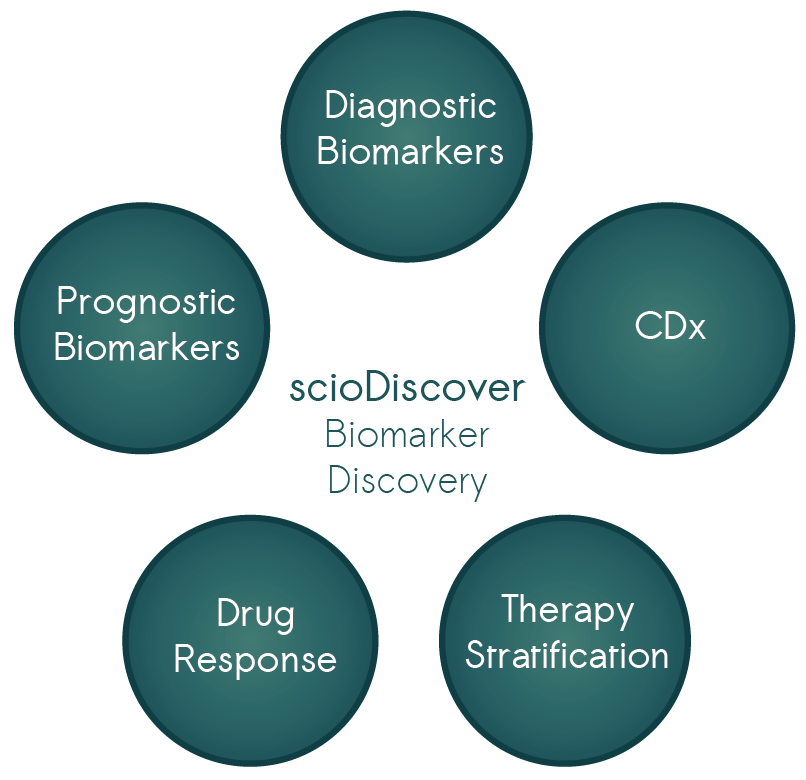
Sciomics supports the discovery and development of a variety of different protein biomarker types such as drug response markers, stratification markers, CDx markers, prognostic biomarkers or diagnostic biomarkers.

Our track record in biomarker discovery

We have performed successful biomarker studies in diverse research areas, including:

  • Acute Kidney Injury (AKI)
  • Assessing Dengue Fever Severity
  • Neurodegenerative Diseases (Alzheimer’s & Parkinson’s)
  • MCDS (Metaphyseal Chondrodysplasia, Schmid Type)
  • COVID-19 disease severity
  • Endometrial Cancer
  • Endometriosis
  • Infectious Diseases

      Learn about
  these projects 
  

Comprehensive Scientific Support for Protein Biomarker Discovery & Development

 We offer tailored expert guidance throughout the entire process, from study design and protein analysis to data interpretation and biomarker validation. Choose Sciomics as your preferred Biomarker CRO for development projects. 

Sciomics supports your protein biomarker development project via the steps study design, sample selection, sample analysis, data analysis, data interpretation as well as validation.

1. Study design:  Our experts help perfect your experimental biomarker study setup, sample, and control selection for robust, meaningful results.

2. Sample selection: We analyze diverse sample types (plasma, serum, urine, CSF, ISF, PBMC, tissue, cells, etc.), requiring minimal input amounts.

3. Sample analysis: Our experts process your samples from protein extraction to incubation, delivering results quickly (within few weeks).

4. Data analysis: Comprehensive bioinformatics and machine learning provide actionable insights, ROC-curves, and robust, interpretable biomarker panels for routine testing.

5. Data interpretation: Detailed reports and guidance to support your validation and follow-up strategies.

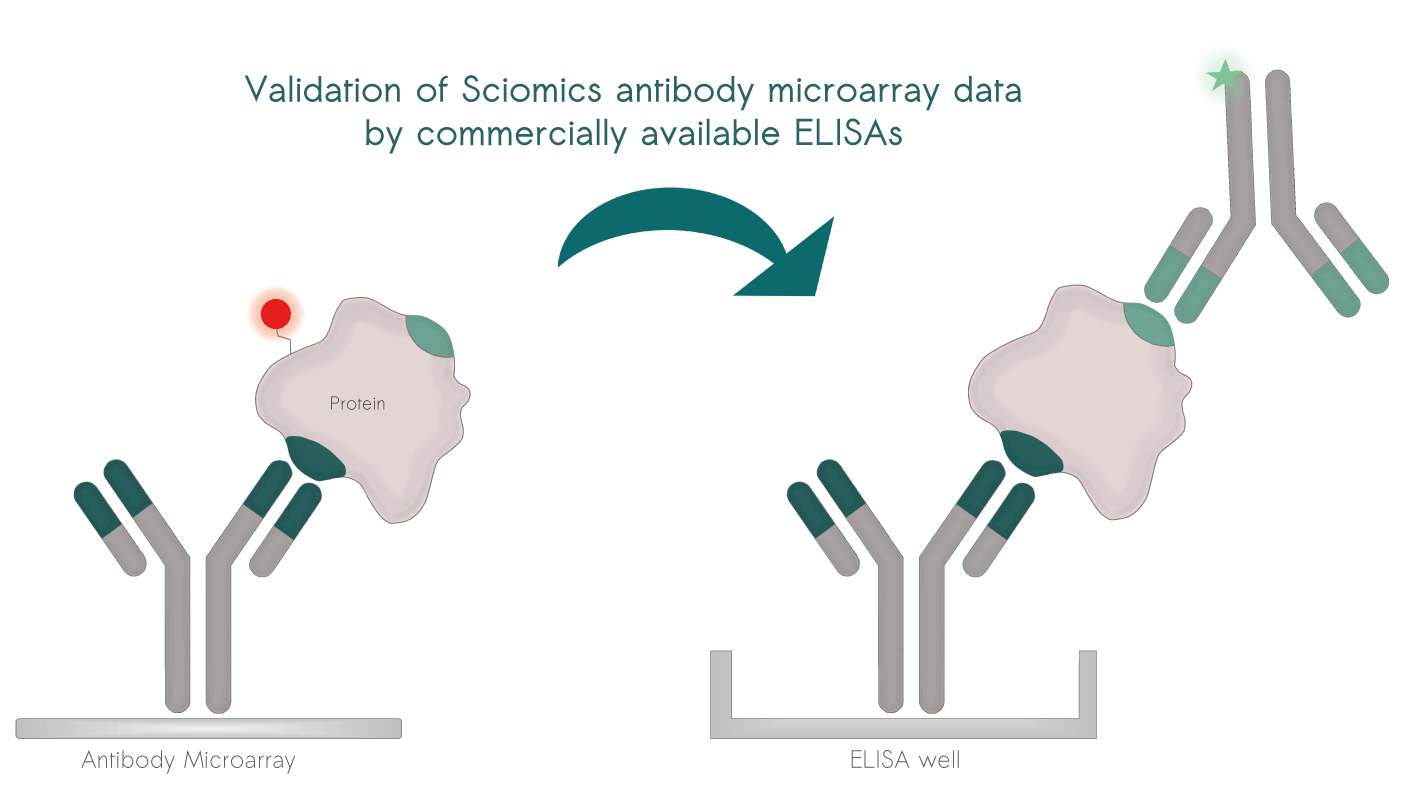
6. Validation:  Our antibody platform facilitates easy transfer to standard immuno-assays, accelerating validation and diagnostic assay development. 


Biomarker discovery based on our antibody-based discovery platform ensures a straight-forward translation into other immuno-assays for validation, accelerating and de-risking the development of diagnostic assays. 


      Discuss your project
  with a scientist 


Validating scioDiscover Biomarkers: Proven Success

Direct Validation: Easily confirm scioDiscover findings using common immuno-assays like ELISA.

Accelerated Implementation: Speed up the journey from biomarker discovery to clinical use and diagnostics.

Exceptional Correlation: Strong agreement (Pearson’s r > 0.9) between discovery and validation data.
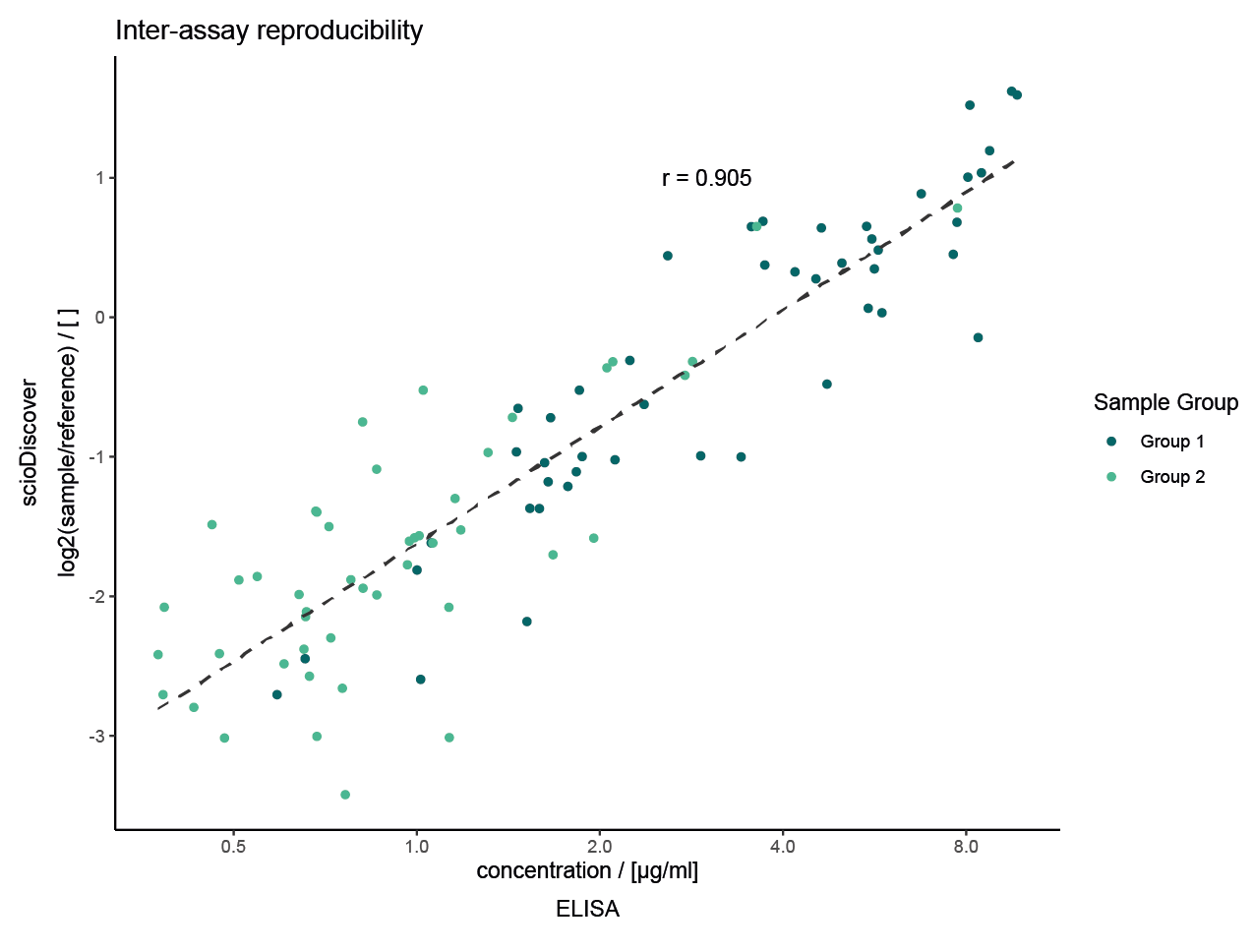
 

Correlation of r > 0.9 for data generated by the scioDiscover platform and biomarker measurement in a routine clinical laboratory

An immunobased discovery approach for protein biomarkers enables an easy translation to other immunobased platforms such as ELISA for validation.


Selected projects with external validation

Roche: Validated two biomarkers using their Elecsys platform ( poster)

AbbVie: Confirmed biomarkers from a small cohort on an internal platform (paper)

University Hospital Heidelberg: Validated CRP in their clinical laboratory; additional marker confirmed by ELISA in our lab (paper)

Hannover Medical School: Validation of tissue proteomics/phosphoproteomics in a mouse model by Western Blotting (paper)

Charité: Verified phosphorylation state via Western blot/IHC in a tissue study (paper)

Testimonials

PD Dr. med. Mascha O. Fiedler-Kalenka and Dr. med. Benjamin Seybold

Heidelberg University Hospital, Department of Anesthesiology, Heidelberg, GermanyGerman Center for Lung Research (DZL), Translational Lung Research Center Heidelberg (TLRC), Heidelberg, Germany

"From the very beginning, working with the friendly and highly competent team at Sciomics was both professional and refreshingly straightforward. We particularly valued their openness to our specific research questions and the expert support they provided in planning and interpreting our exploratory cytokine analysis in a preclinical lung injury model. Communication was always on equal footing, enriched by Sciomics’ deep expertise, which also sparked new ideas for future projects."

Product: scioCD

Tara Sigdel, PhD

Associate Professor, Department of Surgery, University of California San Francisco

"We collaborated with Sciomics GmbH in Germany to analyze proteomics data from blood samples of kidney transplant recipients and liver perfusates during normothermic machine perfusion. Throughout the process, Sciomics provided exceptional support, ensuring timely data delivery and valuable assistance with data analysis. Their expertise and commitment have been instrumental in advancing our research, and we are currently using their data in multiple manuscript submissions. I highly recommend Sciomics for their reliable service and expertise in proteomics."

Product: scioDiscover